


Singapore Launches AI Safety and Resilience Initiatives at Parima Conference
Singapore’s Infocomm Media Development Authority (IMDA) used the Parima conference in Singapore to announce three new initiatives aimed at strengthening AI safety and resilience. As AI systems become more capable and autonomous, the authority highlighted the emergence of new risks, including deliberate misuse by bad actors and unintended actions by AI systems themselves.
New Frameworks for AI Safety
IMDA, which leads the ASEAN effort on AI regulation and governance, emphasized that no single safeguard is sufficient to address these risks. The authority outlined new lines of defence, including guidance and governance for AI, building AI safety evaluation capabilities, and strengthening cyber defences.
The three initiatives launched include a Starter Kit for testing agentic systems for safety and reliability, the AI Tester Accreditation Programme (AI TAP) by the AI Verify Foundation (AIVF), and the formation of the Frontier AI Resilience and Security Taskforce (FAIRS). AIVF is a global open-source community that convenes AI owners, solution providers, users, and policymakers to build trustworthy AI.
“Singapore will continue to take proactive steps to ensure that AI remains a trusted, resilient and reliable enabler of innovation by building frameworks that are practical for businesses and aligned with global standards,” said IMDA in a statement. The initiatives aim to advance AI securely so that individuals and businesses can use AI responsibly and with greater confidence.
Risk Managers Adopt Augmented Intelligence
At the Parima conference, risk professionals expressed a balanced view of AI’s rise, moving beyond conceptual discussions to practical applications. Annacel Natividad, president of the association, highlighted the recently launched Parima AI Labs as a pilot program designed to help risk professionals build actual AI-driven prototypes to address corporate vulnerabilities.
“It is important that we do not simply talk about how AI might change our profession. We need to experiment with it, understand its practical applications and learn how to use it responsibly,” Natividad said in an interview Asia.
Jane Whiter, interim CEO of the Risk Management Institute of Australia (RMIA), described AI as “the biggest library ever built” and emphasized the importance of distinguishing between information and intelligence. “AI is not different to what we have done for decades. We are naturally inquisitive and AI is enabling us to be better, using our human logic to determine what is used and what is not,” she said.
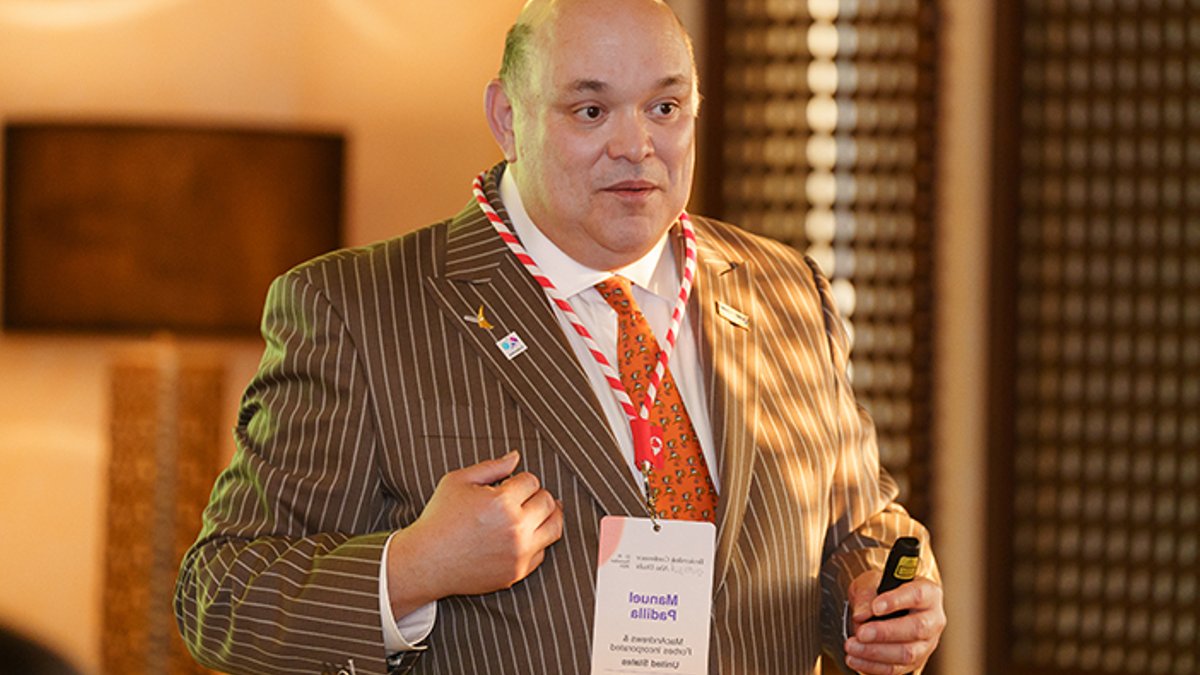
Manuel Padilla, vice-president at MacAndrews & Forbes Incorporated and president of US association RIMS, echoed this sentiment, urging professionals to view AI as a tool—specifically, as augmented intelligence that enhances human skills rather than replacing them.
Balancing Opportunity and Risk
Natividad noted that AI presents both strategic opportunities and operational risks. The opportunity lies in efficiency and analytical depth, allowing AI to process massive datasets, scan for emerging geopolitical or supply chain patterns, and automate heavy reporting. This enables risk teams to focus on strategic analysis and decision support.
However, AI also introduces distinct risks, including data privacy violations, algorithmic bias, IP exposure, cybersecurity threats, and overreliance on automated systems. “Risk managers must be involved in AI governance from the outset, establishing clear guardrails around data inputs, accountabilities and decision limits,” Natividad said.
The insurance industry is grappling with how to cover AI-related risks. While certain AI-related losses, such as data breaches or system outages involving AI applications, may trigger existing cyber or Tech E&O policies, coverage should not be assumed. The market is working to clarify where existing wordings respond, where exclusions apply, and where standalone AI coverage is necessary.
“Companies should work closely with their brokers to map their specific AI use cases against their policies rather than assuming existing cover is sufficient,” Natividad added.
Human Control Remains Central
Despite the growing capabilities of AI, risk leaders agree that human control should remain central. “Ultimately, AI is a tool to process and connect information faster, but human judgement, governance, and ultimate decision-making remain with us,” Natividad said, reflecting the consensus among her peers from Australia and the US.

AXA Report Highlights Shift Toward Prevention and Resilience


