


Canada and EU propose closer alliance without full membership
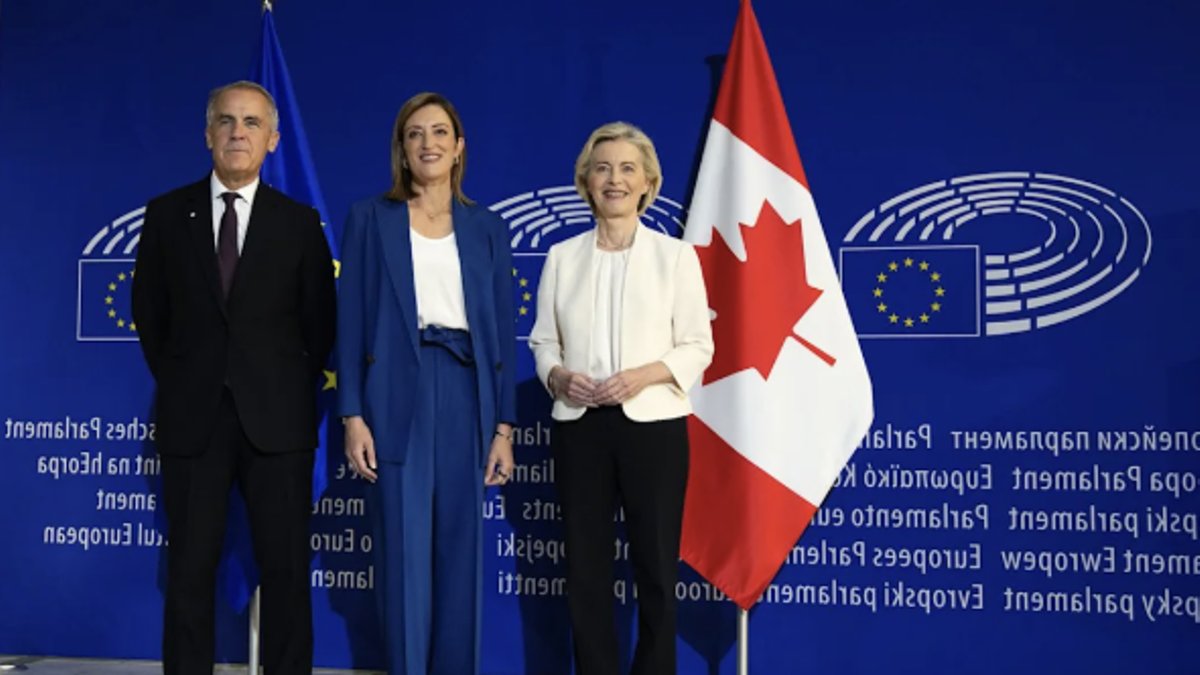
The European Commission has introduced a new framework that would designate Canada as the first country to achieve associate member status within the European Union. President Ursula von der Leyen unveiled this initiative during her annual State of the Union address, positioning it as a means to strengthen collaboration across trade, technology, defense, energy, and critical minerals—sectors where both parties recognize increasing strategic importance.
Von der Leyen described the arrangement as an Alliance for the Future, intended to synchronize economic and security priorities. This goes beyond the existing Canada-EU Full Economic and Trade Agreement (CETA) by incorporating joint ventures in artificial intelligence, advanced manufacturing, and supply chain resilience. Associate membership would not confer voting rights or mandate adoption of all EU regulations, but it would establish a formal structure for cooperation.
Prime Minister Mark Carney welcomed the proposal during an address to the European Parliament, framing it as a chance to bolster Canada’s economic independence. He stressed that Canada would remain sovereign and would determine its international partnerships independently. The Canadian prime minister’s response came amid growing public attention to Ottawa’s relationship with Washington. In his European Parliament remarks, Carney argued that no country should be able to control Canada’s markets, undermine its freedoms or limit its strategic choices. This stance follows rising uncertainty in relations with the United States, where former President Donald Trump had threatened retaliatory tariffs against Europe and Canada if the alliance materialized.
Trump criticized the idea as unrealistic and warned of potential trade barriers, alleging the EU was prioritizing its own interests over those of the U.S. The European Commission dismissed these claims, insisting the partnership was not designed to target Washington but rather to deepen cooperation among democratic allies. The disagreement reflects broader strains in transatlantic relations, where Canada, the EU, and the U.S. remain economically and militarily interconnected.
Six key sectors to drive cooperation
The proposed associate membership would prioritize six areas: trade and investment, technology, defense, energy, critical minerals, and cybersecurity. For Canada, the arrangement could provide access to Europe’s vast consumer market and advanced industrial infrastructure while reducing dependence on U.S. or Chinese supply chains. The EU, in turn, would gain a partner with substantial energy and mineral resources—essential for its green energy transition and defense requirements.
A key obstacle is the absence of associate membership in current EU treaties. Negotiations would require defining legal structures, market-access terms, and political commitments, all of which demand approval from the EU’s 27 member states. The process could span years, with the final agreement determining Canada’s level of influence without full membership.
Canada’s energy and mineral industries would be central to the partnership. The EU aims to decrease reliance on Chinese-controlled supply chains for lithium, cobalt, and rare earth metals, while Canada possesses extensive deposits. Collaborative projects in battery manufacturing, renewable energy, and Arctic policy could become key priorities. The proposal also marks a shift in how the EU engages with non-member allies, offering an intermediate option between informal cooperation and full integration.
Setting a precedent for future alliances
Historically, such deepened partnerships have been uncommon. The closest comparison is the EU’s Strategic Partnership Agreement with Ukraine, which provided political and economic support without conferring membership. However, Canada’s initiative expands the scope to include both economic and security coordination. If approved, it could serve as a model for other democracies seeking closer EU ties without pursuing full accession.
Von der Leyen’s announcement follows shared challenges faced by both sides, including China’s industrial growth, Arctic geopolitical competition, and unpredictability in U.S. policy. For Canada, the alliance offers a way to reduce risks from fluctuating transatlantic relations. For the EU, it strengthens strategic independence while preserving existing alliances. The initiative’s success hinges on political commitment, legal negotiations, and the ability to address U.S. concerns without escalating trade conflicts.


