


Frontline posts record profit as tanker demand wanes
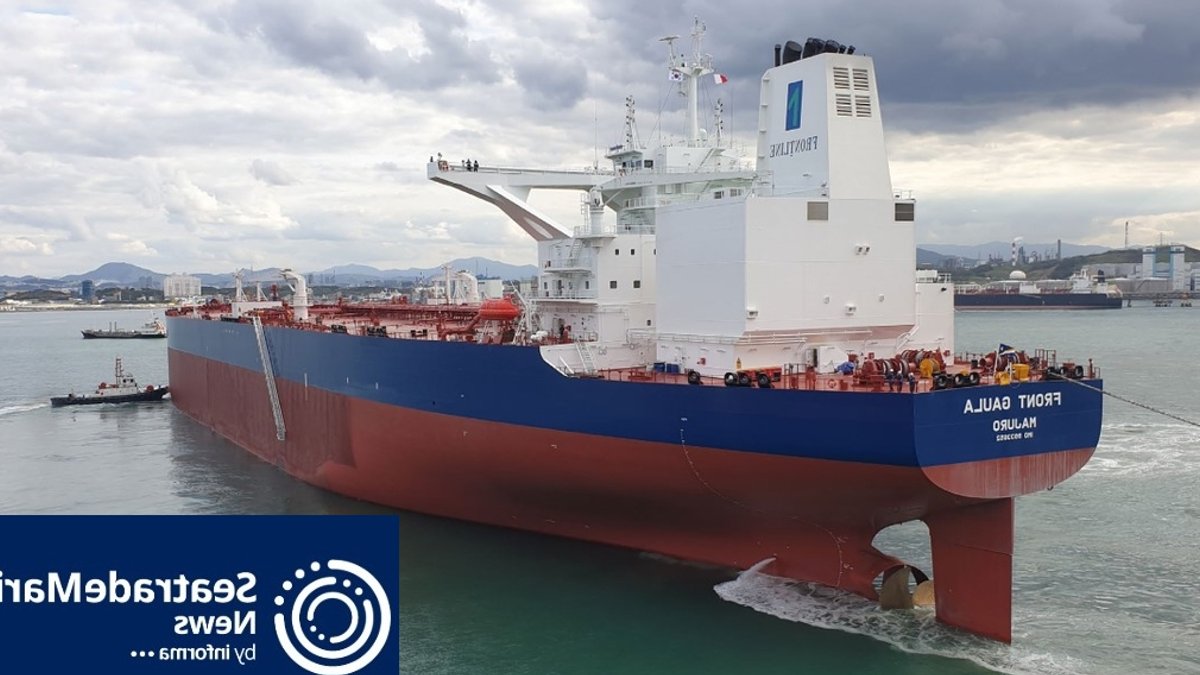
Frontline reported its best-ever quarterly profit of $659.2 million for the second quarter of 2026, a sharp jump from the $79.1 million it posted in the same period last year. The result also tops the strong first quarter, when a net profit of $559.1 million was recorded.
Revenue for the quarter reached $943.3 million, compared with $480.1 million in Q2 2025. The firm’s VLCCs, Suezmax tankers, and LR2/Aframax tankers booked average daily rates of $152,700, $111,500, and $92,400, respectively.
Volatile markets and a temporary shift in fundamentals
Lars Barstad, CEO of Frontline Management, described the quarter as volatile. He said the entire energy complex is being challenged, creating inefficiencies that support tanker utilisation. He added that the fundamental story of oil demand versus vessel supply has temporarily taken a back seat while the firm focuses on capturing near‑term value.
This framing matters because the earnings streak is tied to disruption rather than steady demand growth. Its performance is increasingly linked to geopolitical friction and rerouted cargoes, a situation that can change quickly.
Related: Drewry says port congestion not due to underinvestment
In July, Frontline locked in two VLCC time charters at notable rates. A 2016‑built vessel was chartered for two years at an average of $90,000 per day, structured at $110,000 per day for the first year and $70,000 for the second.
Another VLCC was fixed for three years at an average of $75,000 per day, with rates stepping down from $110,000 to $70,000 and then $45,000 across the three years.
Charter coverage and the Red Sea factor
For the third quarter, the group has 86% of its VLCC spot days covered at an average rate of $156,900 per day. Its estimated breakeven over the next 12 months is $23,800 per day.
The breakeven figure remains modest.
Related: US recyclers face new EU auto waste rules
The company pointed to renewed Houthi attacks on Saudi‑related shipping in the Red Sea as a reason to expect more volumes to move via the Cape of Good Hope.
That shift increases tonne miles—the distance cargo travels—which supports tanker demand. It expects average VLCC voyage lengths to stay high, with Asian buyers likely to reconsider their reliance on Middle Eastern crude and source more widely.
Barstad acknowledged the difficulty of predicting an end to the Middle East conflict. He said it is hard to see the ultimate outcome, but conviction regarding longer‑term effects remains firm. Energy supply security will increasingly shape strategic decisions and alter trade lanes, along with the need to replenish oil inventories.
The outlook hinges on conditions that are inherently unstable. The record quarter came from inefficiencies and rerouting, not from a balanced market. Whether those conditions hold into next year is uncertain, but the numbers speak for themselves.

Drewry says port congestion not due to underinvestment


