


US container rate spread hits $3,334
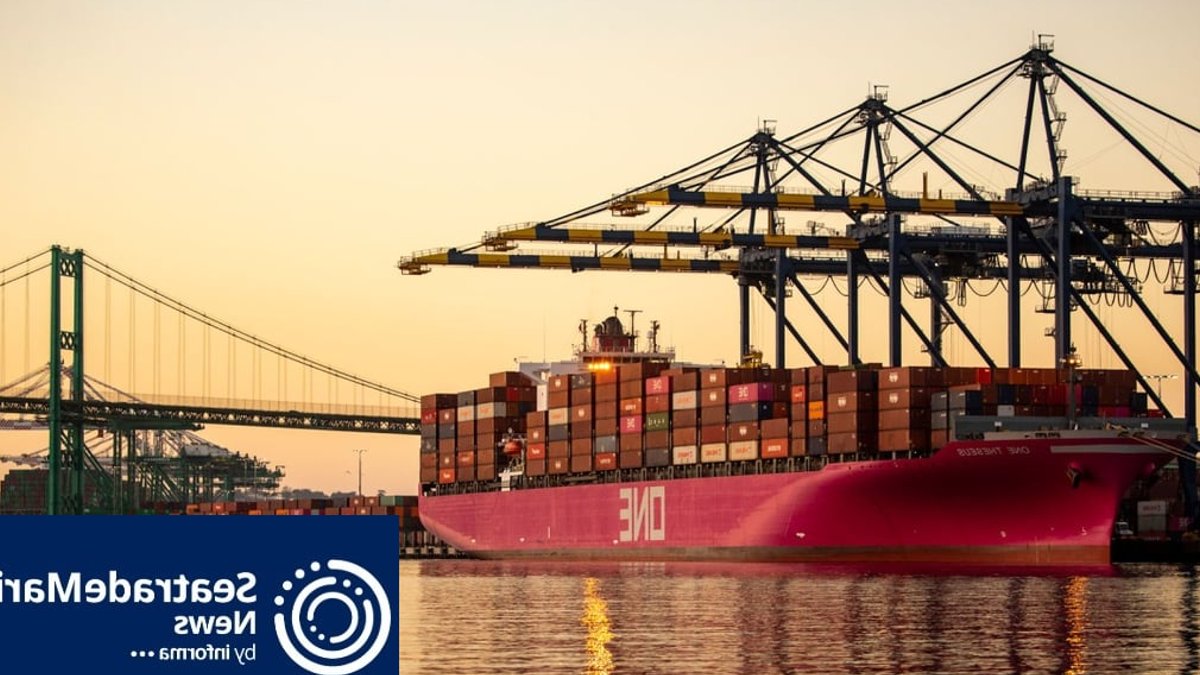
Container shipping rates from Asia to the U.S. have split so sharply that moving cargo through the West Coast now costs $3,334 less per forty-foot equivalent unit than the East Coast, a gap larger than the entire pre-crisis price of either route.
Suez detour fails to cool East Coast rates
A handful of carriers—Maersk, MSC, and CMA CGM—have sent vessels back through the Suez Canal, but the shift hasn’t eased pressure on spot rates to the U.S. East Coast. Xeneta chief analyst Peter Sand called the partial return “testing the waters” rather than a full reversal. Most loops still sail around the Cape of Good Hope, and some carriers run only one leg—either the outbound or return trip—through Suez.
“The devil remains in the detail,” Sand said. “Everyone wants the new normal, but there is no water on the Rhine or the Panama Canal, no end to trade wars, and no pause in typhoons clogging Shanghai.”
Spot rates to the U.S. East Coast have climbed past $10,500 per feu, while West Coast rates sit at $7,193, a 2.7% weekly increase. Before the Red Sea attacks began in late February, the West Coast rate was $1,879 and the East Coast $2,651.
Shippers face a $3,300 choice
That $3,334 spread is now wider than the total cost of shipping a container to either coast before the crisis. Sand urged shippers with inland distribution flexibility to route cargo through Los Angeles or Long Beach and truck or rail it east, calling the potential savings “dramatic.”
Some supply-chain managers have already accepted steep surcharges, while others refuse to pay. “They’re playing Whack-A-Mole,” Sand said. “Every time a new challenge pops up, they scramble for a solution.”
An early peak season fizzled on European routes, but U.S. imports keep pushing rates higher. The imbalance has left carriers and shippers searching for alternatives that don’t exist yet.
In past disruptions, shippers often shifted volumes between coasts to avoid bottlenecks. This time, the sheer size of the rate gap suggests the market hasn’t found equilibrium. Rail and trucking capacity from the West Coast remains tight, but the math still favors moving containers as far east as possible by land.
Xeneta’s data shows no sign of a near-term correction. Carriers continue to add capacity where rates are highest, reinforcing the divide between the two coasts.
Carriers might consider the upcoming Saudi logistics event set for Jeddah Superdome as a venue to discuss these diverging market paths.

Saudi logistics event set for Jeddah Superdome


