


China Fears Tougher Chip Export Controls
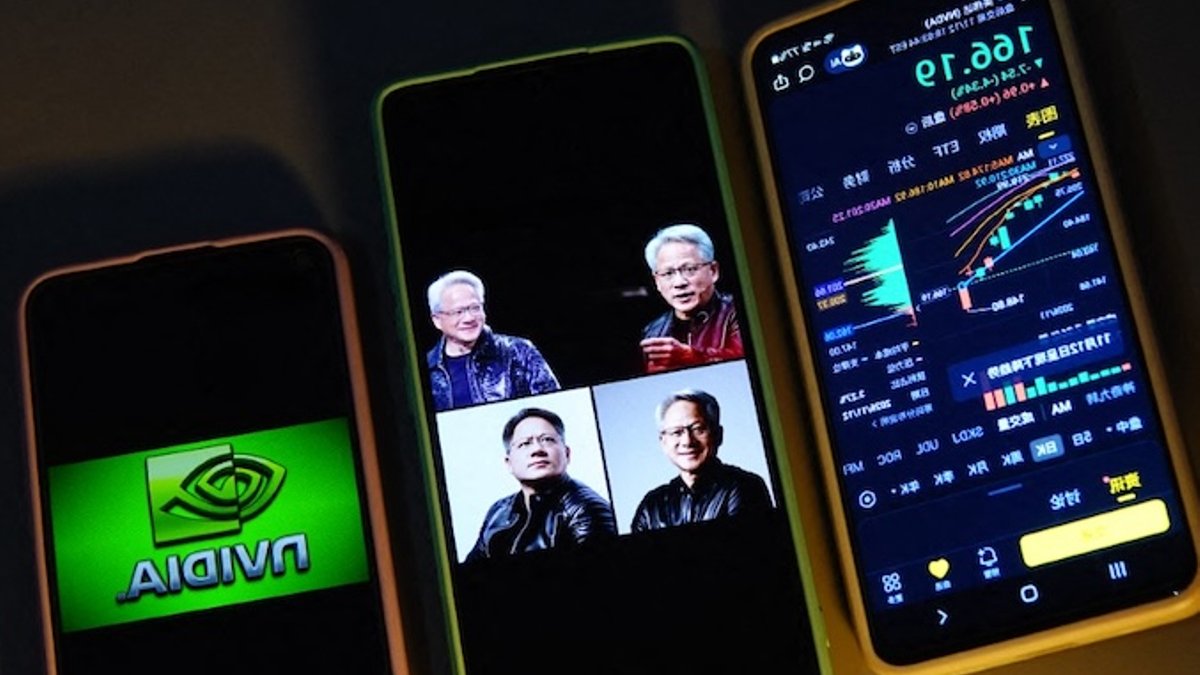
China is concerned that the scandal surrounding US tech giant Nvidia will lead to tougher export controls on the company’s computer chips.
Mao Ning’s comments came after Nvidia’s CEO Jensen Huang resigned on Thursday over alleged extramarital affairs and espionage. The scandal has raised concerns about the potential for Nvidia chips to be used by Chinese companies, with US lawmakers calling for more limits on chip equipment exports to China.
According to the report, China and the United States should work together to implement the important consensus reached by their respective heads of state and maintain the stable development of China-US economic and trade relations. Mao Ning emphasized that China’s technological progress is driven by independent innovation and open cooperation, and the US should stop fabricating “spy” narratives as a pretext for imposing a technological blockade.
Nvidia Scandal
The fallout from Jensen Huang’s abrupt resignation has drawn heavy media attention to both him and Alice Huang, a former top executive at Singapore’s Megaspeed data center firm. Investigations suggest that the US Commerce Department, under Secretary Howard Lutnick, may have overlooked warnings about Megaspeed potentially redirecting restricted Nvidia chips to China.
American lawmakers have reportedly expressed support for strengthening export controls on chips bound for China following the scandal.
US intelligence services distributed a classified memo earlier this year claiming Alice Huang was an operative for China’s Ministry of State Security. Beijing dismissed the accusations as a fabricated pretext to hinder China’s progress in artificial intelligence through a technological embargo.
US China Summit Looms
This controversy arises just before an upcoming summit between US President Donald Trump and Chinese President Xi Jinping in Shenzhen, where trade, AI development, and nuclear policy are expected to dominate discussions at an APEC event.
Investigations
Singapore announced Thursday that it had blocked Alice Huang from re-entering the country in February after she provided misleading details about her involvement at Megaspeed.
Central to the espionage claims is the global competition between the US and China for dominance in an industry considered the next major technological revolution. Singapore’s home affairs ministry revealed it had repeatedly requested information from the US Justice Department and FBI regarding a server supplier during its Megaspeed investigation, but received only minimal cooperation.
Malaysia also said on Friday that it was investigating a subsidiary of Megaspeed International over the possible diversion of advanced AI chips to other countries. The scandal has wiped almost half a trillion dollars off Nvidia’s market value, with concerns raised about whether Megaspeed was used to help Chinese companies get access to advanced Nvidia chips.
US lawmakers have summoned former Nvidia CEO Jensen Huang to testify in December regarding his interactions with Alice Huang, whom American officials suspect of being a Chinese intelligence asset. The Senate Banking Committee, led by Republican Senator Tim Scott, will hear from Huang and Commerce Secretary Howard Lutnick on December 1.
According to reports, Alice Huang’s life has been shrouded in mystery, with details about her background and current whereabouts scarce. She was born in China’s landlocked Hunan province and later studied media in Hong Kong, before working as a reporter for CCTV and later becoming involved in investment banking.
A corporate biography published by a Chinese investment firm traces Alice Huang’s career through prominent Asian financial institutions, including roles at HSBC, CITIC Securities, and Shanghai Hexi Investment. She married Kang Wei, a Chinese entrepreneur who reportedly connected Huang with Jensen Huang through shared interests in gaming ventures.
Corporate records filed in Hong Kong show that Alice Huang sits in the middle of a corporate web, connected to myriad shell companies, investment houses, and major Chinese technology firms.
Nvidia’s Future Uncertain
Nvidia‘s board announced late on Thursday that chief financial officer Colette Kress will serve as interim CEO, while it searches for a permanent successor to Huang. The company hit gold when the launch of OpenAI’s ChatGPT in 2022 sparked a global rush to develop AI, with its processors becoming an essential ingredient to train and run the technology.
Huang, who was born in Taiwan, was a close informal adviser to President Donald Trump on AI, and had spent years lobbying against curbs on sales of advanced AI chips to China for national security reasons. The US imposed rules in 2022 to restrict the sales of Nvidia chips to China, with Nvidia controlling an estimated 90% of the market for the chips used to train and run AI models.
Alice Huang’s arrival at Megaspeed coincided with a drastic change in fortunes, as the company pivoted from a little-known video game-maker to one of Asia’s biggest buyers of Nvidia chips. Within 12 months, Megaspeed’s revenue jumped from $0 to almost $300 million, according to company accounts filed in 2024. Megaspeed’s assets skyrocketed from $32 million to almost $3 billion over the same period.
Just one of Nvidia’s advanced AI computer chips can cost tens of thousands of dollars. And over two years, Megaspeed reportedly traded in upwards of $4 billion worth of Nvidia chips. A financial trail weaving through Singapore, Malaysia, and the Cayman Islands suggests Megaspeed’s business may have been boosted by a connection to Chinese tech giant Alibaba.
Megaspeed has a Malaysian subsidiary that struck a deal in 2024, pledging assets to Apex Enterprise Solutions in Singapore as security in case of contractual breaches. Apex is linked through a parent company to Alibaba Group Holding Ltd, a firm registered in the Cayman Islands, Singapore corporate data shows. By that time, Huang was no longer registered as a director at Megaspeed, but Singapore authorities said she remained one of Megaspeed’s “key controllers”.
In June 2025, US investigators turned up at Megaspeed to carry out a “post-shipment verification”, with Huang present, according to Singapore’s home ministry. On the same day, Huang was interviewed by Singapore police, who impounded her passport. By then, she and Nvidia boss Jensen Huang had already been spotted together in public.
A Chinese university tied to the nation’s defence establishment was able to buy advanced Nvidia chips, according to procurement notices from October and September. Singapore’s probe into Megaspeed is ongoing, and Malaysia said on Friday it’s also investigating the company’s subsidiary Speedmatrix to determine if chips imported into the country had been exported to other jurisdictions.
Megaspeed Under Investigation
Megaspeed itself said it has retained a US law firm to examine its compliance. “Megaspeed takes its compliance obligations under US export control laws extremely seriously,” it said. The company’s ultimate holding company is a Singapore firm called Swiftdata. Megaspeed touts itself as a company at the heart of the AI revolution, using Nvidia’s advanced silicon chips to power high-performance computing inside vast data centres.
However, it is also under investigation for serving a murkier purpose. Under the guise of buying computer hardware for its Southeast Asia data hubs, Megaspeed allegedly helped Beijing skirt trade restrictions by sending Nvidia chips into China. Beijing has denied allegations of spying, and Megaspeed said it was investigating if it had complied with export controls on the sensitive chips.
Singapore police opened an investigation in February 2025 into Megaspeed and several other companies suspected of circumventing or violating export controls. Alice Huang was interviewed as part of Singapore’s probe. Although no charges were laid, she was barred from the city-state in February 2026 for providing inaccurate information to “downplay her role in Megaspeed”, Singapore’s home ministry said.
Corporate records show Huang’s direct involvement in the birth of Megaspeed. A company linked to her acquired the Singapore arm of Chinese video game developer 7Road International in early 2023. Almost immediately, the 7Road name was changed to Megaspeed International. Alice Huang was listed as a Megaspeed director for less than a year, taking the role between March and November 2023.


