


CEO on Innovation and Global Growth
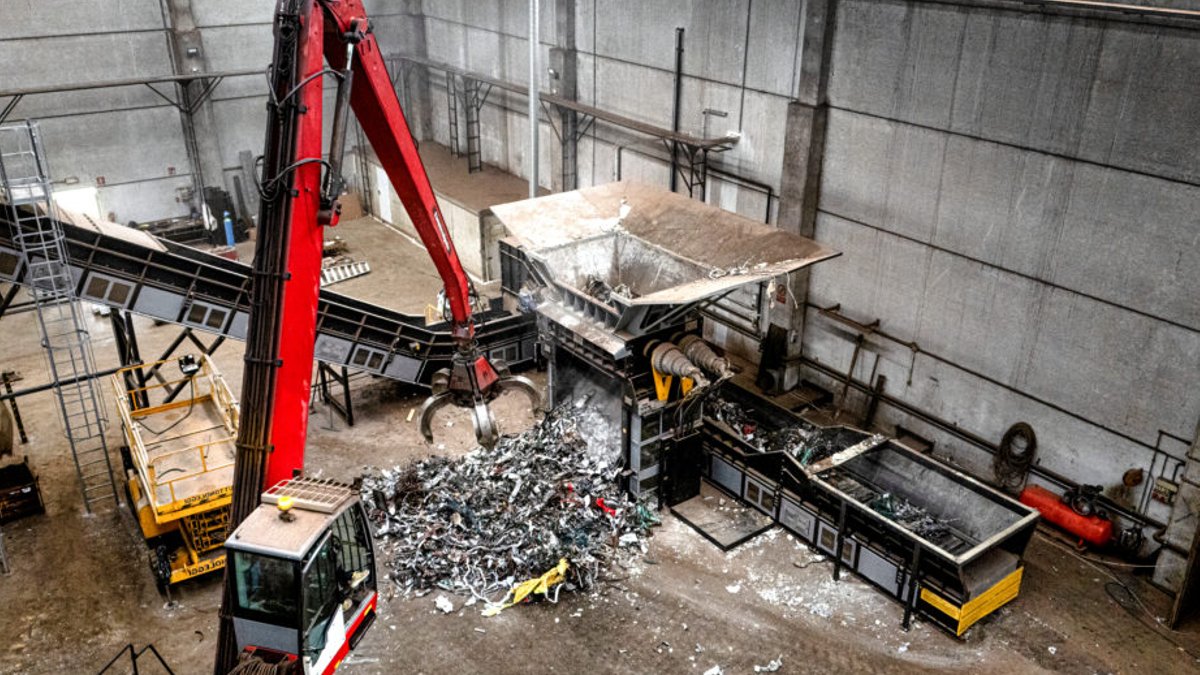
The recycling industry is evolving rapidly, a shift that For Rec CEO Marco Zoccarato says is driving the company to stay ahead by delivering technologies that are more efficient, more sustainable and capable of transforming waste into valuable resources.
For Rec has been operating for many years in the sector and is now recognised as a highly specialised partner in the design and manufacturing of machinery and complete plants for waste treatment.
The positioning is based on a strong engineering approach, enabling the company to combine performance, reliability, efficiency and deep process expertise.
Today’s customers are looking for robust and versatile plants with controlled operating costs, capable of ensuring production continuity even under demanding conditions.
This demand is steadily increasing, along with the growing interest in turnkey, customised solutions focused on the valorisation of secondary raw materials.
Advanced control systems are also playing an increasingly important role, enabling greater energy and operational efficiency, lower management costs and extended machine lifespan.
For Rec is not simply a manufacturer but a partner and a high-level technical consultancy that delivers tailor-made plants.
Design principles and efficiency
In a rapidly evolving market, customers are looking for partners capable not only of supplying machines, but of delivering complete, high-performance solutions that support the ecological transition.
The design principles that unite the solutions focus on project customisation: each plant is developed on a tailor-made basis, according to the materials to be processed and the client’s objectives.
From a technical standpoint, the machines share several key principles: an extremely robust mechanical structure; energy and production efficiency; simplified maintenance, with easy access and components designed to minimise downtime; modular flexibility, allowing the configuration of complete and scalable lines adaptable to different materials; and separation systems designed to achieve very high-quality output fractions, as demonstrated in the plants dedicated to metal processing as well as WEEE treatment such as refrigerators and photovoltaic panels.
Every plant is developed through detailed material analysis, application testing and direct dialogue with the customer.
The entire machinery range is designed to operate at high production capacities, while delivering zero environmental impact through optimised energy consumption, reduced emissions and full valorisation of recovered fractions.
Global reach and future investments
Efficiency has become a decisive factor in plant selection in recent years: reduce consumption, operational continuity, ease of management and the quality of recovered fractions are now key priorities.
The machines are designed to operate continuously, ensure stability even when handling challenging materials, and optimise energy consumption.
From an operational standpoint, the focus is on easily accessible components, systems that reduce wear, and modular configurations that simplify management and minimise downtime.
Regarding maintenance and operational continuity, the company supports its engineering approach with a structured service organisation and scheduled maintenance programmes aimed at minimising machine downtime.
Rapid interventions are provided even in emergency situations, on-site support through mobile workshops and specialised technical staff, as well as dedicated remote assistance.
Another key advantage is spare parts availability: thanks to an internal warehouse, the company guarantees immediate availability of most components, including customised ones, with worldwide delivery within 24–48 hours.
This is complemented by integrated real-time remote assistance systems and training programmes for technical personnel.
Related: Saudi Re buys into Lloyd’s market
Efficiency means consistent performance, stable processes, minimised consumption and controlled maintenance.
These are essential elements for reliable, sustainable plants capable of generating long-term value.
Expanding internationally
International markets now generate 80% of the company’s turnover, thanks to a flexible engineering approach and technologies capable of addressing very diverse industrial needs.
The regions showing the strongest response to the solutions are Central and Northern Europe, the Middle East and Asia, and North America, markets that are particularly receptive to efficient, reliable technologies capable of processing complex materials.
This expansion has been driven by several key factors: tailor-made design, which allows the company to adapt each plant to local requirements; high-efficiency, zero environmental impact technologies, highly appreciated in advanced markets; the wide versatility of the systems, capable of handling WEEE, metals, plastics, wood, electrical cables, photovoltaic panels, MSW, and many other waste streams; and a strong service and spare parts network, ensuring fast and continuous customer support.
The combination of customisation, technological quality and reliability has enabled the company to strengthen its international presence and secure new projects in multiple countries.
Strategic priorities for growth
Looking ahead, three key strategic directions will drive For Rec’s growth.
The first is expansion in international markets, as discussed above.
The second direction focuses on the development of new applications.
Waste streams are evolving, and the market is increasingly demanding solutions for emerging materials with high recovery potential.
For this reason, the company is expanding its lines dedicated to photovoltaic panels, complex industrial waste, and next-generation WEEE.
Finally, the organisation is pursuing technological evolution.
Investments are being made in research and development to make the machines even more efficient, with reduced energy consumption, lower wear and greater operational continuity.
At the same time, solutions with increasingly high production capacities and zero environmental impact are being developed.
In practice, this means customers will see more automated control interfaces and predictive maintenance features integrated into their plants, reducing the need for manual intervention and allowing operators to focus on optimising output rather than troubleshooting hardware.
The move toward higher production capacities could also mean smaller facilities are needed to process the same amount of material, which appeals to companies with limited floor space or strict zoning regulations.
Old pickleballs are finding new purpose in the UK through a similar push to keep materials out of landfills, demonstrating how the global industry is adapting.
For Rec’s dedication to advanced engineering creates a success story for brokers who help clients handle the financial aspects of large-scale industrial projects.
The company’s recent strategic moves also mirror the bold entry of Saudi Re into the Lloyd’s market, highlighting a broader trend of aggressive international expansion in specialized sectors.

Old pickleballs find new purpose in UK


